THIS WEEK IN 2A NEWS — August 25, 2026
By Bryan L Singer, USCCA Instructor
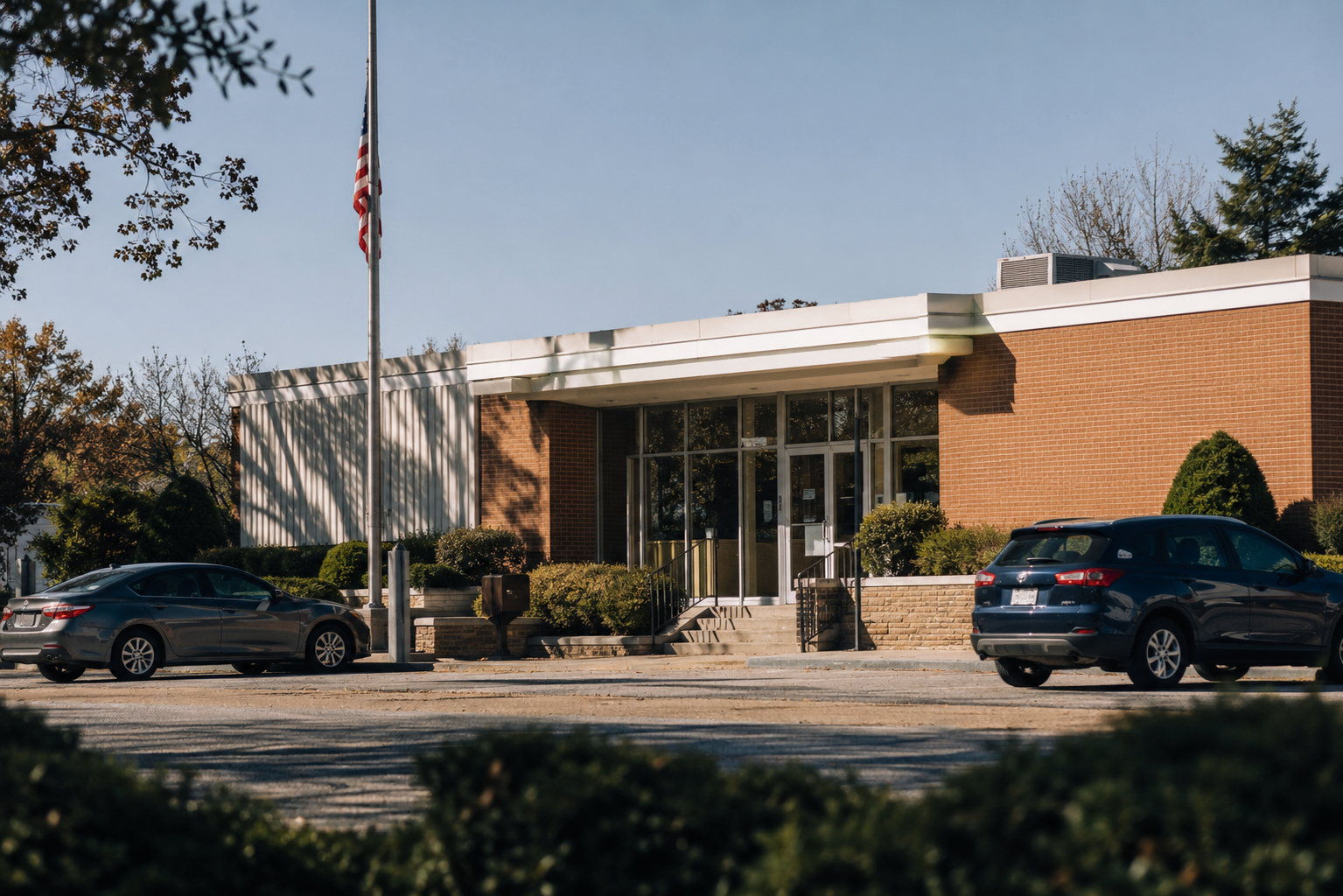
The map moved this week. The question is whether you know where the rest of the lines are.
Welcome to this week’s roundup.
The goal here isn’t to be first with a headline. It’s to tell you what actually changed, what didn’t change, and what any of it means for the way you carry and train. A lot of 2A coverage stops at the celebration. We’re going to keep reading past it — because the fine print is where people get hurt.
Four items this week, then a drill you can run tonight.
One of the Oldest Gun-Free Zones in America Just Came Off the Board
For decades, one of the most ordinary errands in American life came with a quiet legal trap. You’d stop to mail a package, cross the threshold, and in that instant be standing in a federal facility where Postal Service regulations flatly prohibited the firearm you’d carried lawfully every other minute of your day.
Plenty of careful, law-abiding people never knew that rule existed.
On August 12, 2026, the Department of Justice’s Office of Legal Counsel issued a slip opinion concluding that federal law permits lawful carry in post offices open to the public — and that the Postal Service’s prohibition can’t be enforced.
The reasoning is unusually plain for a federal legal opinion. 18 U.S.C. § 930 restricts firearms in federal facilities, but subsection (d)(3) has always excepted firearms carried “incident to hunting or other lawful purposes.” The government used to read that exception narrowly enough to exclude self-defense. OLC rejected that reading: carrying to defend yourself is a lawful purpose. It leaned on District of Columbia v. Heller — “the inherent right of self-defense” is “central to the Second Amendment right” — and on the plain reality that a neighborhood post office is an unsecured building where people run errands, not a secured federal installation.
The practical result: the broad prohibition in 39 C.F.R. § 232.1(l) can no longer be enforced against lawful carry.
This built slowly. In 2025 a federal district court permanently enjoined the ban as to members of the plaintiff organizations. In July 2026, DOJ voluntarily dismissed its appeal, leaving that intact. August’s opinion extended the reasoning nationally. (NRA-ILA has the full rundown.)
What I’d tell a student
Celebrate it. Then verify it before you rely on it.
An OLC opinion is not a statute. Opinions get revisited, administrations change, and guidance gets rewritten. And clearing the federal layer doesn’t touch the other two stacked on top of you at any given moment: state law — Alabama’s permitless carry has been in effect since January 1, 2023, and it doesn’t override federal facility rules (state overview here) — and private property policy, which can differ building by building on the same street.
Here’s the part that should actually bother you: almost nobody knew the old rule either. It sat on the books for decades while people walked past it every week. It happened to change in your favor this time. Next time it may not, and the consequences of being wrong don’t scale with how sincerely you believed you were right.
The NFA Ruling Has Fine Print Most People Skipped
If your feed told you “the NFA is dead,” your feed oversold it.
On August 5, 2026, Judge Wesley Hendrix of the Northern District of Texas held that the National Firearms Act’s registration and approval requirements for suppressors, short-barreled rifles, and short-barreled shotguns exceed Congress’s constitutional authority. The reasoning: once Congress zeroed out the making and transfer taxes on those categories effective January 1, 2026, the registration scheme could no longer stand on the taxing power. DOJ declined to seek emergency relief, and the injunction took effect August 13.
That is real, and it is significant — the biggest hit the NFA has taken in its 92-year history. Here’s what got left out of the headlines:
• The injunction is limited to the parties in the consolidated cases — and, where applicable, their agencies, members, and customers. It is not a blanket nationwide repeal.
• Several related statutes were not enjoined. 18 U.S.C. § 922(b)(4) still restricts licensed dealers from transferring SBRs and SBSs absent Attorney General authorization, and § 922(a)(4) still governs interstate transportation of them.
• State law is its own layer. Several states require NFA compliance as a matter of state law, and this injunction doesn’t directly touch those statutes.
(NRA-ILA’s breakdown is the clearest one I’ve read.)
What I’d tell a student
This is exactly the kind of moment where somebody cuts down a barrel on a Saturday afternoon based on a headline and finds out the hard way that they were never a covered party.
Same discipline as the range: slow down to speed up. Talk to an attorney licensed in your state before you act on it, and understand that an injunction can be stayed or dissolved with very little notice.
Federal Firearms Rights Restoration Reopens
On August 20, DOJ published a final rule in the Federal Register establishing application standards for people seeking relief from federal firearm disabilities under the Gun Control Act — a pathway that sat effectively dormant for decades. (Reported August 24.)
Narrower relevance than the first two items, but worth knowing. If you have a family member, a coworker, or a fellow congregant navigating a prohibiting record — and most of us do, whether we know it or not — this is a real process rather than a dead end.
It’s also a useful reminder that “prohibited person” isn’t always a permanent status, and that the answer to a hard question in this space is a qualified attorney, not a forum thread.
Women Are Still the Fastest-Growing Group in Training
Not a court case, but arguably the most consequential trend in this industry.
NSSF data cited across the field shows roughly half of all new firearm purchases since 2019 have been made by women, and participation in women-only training has climbed right alongside it. Protection is consistently the top stated reason. (A Girl & A Gun has been tracking this closely.)
What I’d tell a student
This is why Armed & Unbreakable runs every single month instead of once a quarter. A woman walking into her first class deserves an environment built for that, not one that merely tolerates it.
The demand is here. The instruction has to catch up.
The Drill: A Ten-Stop Audit You Can Run Tonight
No ammunition. No range fee. Twenty minutes. I’d argue it closes more real-world gaps than another hundred rounds downrange — and this week’s post office news is the perfect prompt for it.
Step one. Take a notepad. List the ten places you physically go most often in a normal week. Be specific — not “the grocery store,” but the Publix on Highway 52.
Step two. Next to each one, write a single letter:
• Y — I can lawfully carry here, and I can articulate why.
• N — I cannot, and I know the specific reason.
• ? — I’m honestly not sure.
Step three. Answer every ? this week. Use the reciprocity and gun laws map, read the posted signage carefully, or make a phone call to the facility. Most people who run this drill find two or three question marks in places they visit every single week. One of them is usually their own workplace.
Step four. This is the step everyone skips. For every N, what is the actual plan?
Do you have secure vehicle storage — a real solution, not the glovebox? Do you have a non-firearm option and the training to use it? Have you thought through how you’d leave rather than engage? Do you have a plan for the transition itself, which is when the overwhelming majority of negligent discharges happen?
“I’ll figure it out” isn’t a plan. It’s a wish.
The Takeaway
You already understand that situational awareness is a perishable skill. You work on it in the parking lot, in the restaurant, at the range. The legal terrain you’re standing on is part of that same picture, and most people have never mapped it.
Rights get restored in courtrooms. Lines on the map get moved by opinions and rulings and legislation, and this month they moved in our direction. But no court can hand you competence, and no federal opinion can hand you a plan for the specific building you’re about to walk into.
Read the environment. Understand the rules that actually apply. Decide in advance — not at the door, not in the parking lot, not under stress with your heart rate climbing and your kid asking you a question.
The world is not getting simpler. But prepared people have options that the uninformed don’t.
Train accordingly.
Before You Go: Find Out Where You Actually Stand
The First Five Minutes is a free, scored readiness self-assessment — 31 questions, about eight minutes. Every answer is weighted, every weight is shown to you, and every item is sourced to federal guidance or published research. Your results break down by domain, so you can see the half you’re strong in and the half you’ve never touched. Nothing is stored and nothing is transmitted.
Most people are surprised by the split. Take the assessment.
And when you’re ready to close the gaps, we run three programs: Armed & Unbreakable monthly for women, SecondWatch quarterly for active-threat response in workplaces, schools, businesses and places of worship, and RS³ — four two-day intensives where day one is tactical and day two is trauma care, because the fight isn’t the emergency. The hour after is.
* * *
-Bryan L Singer, USCCA Instructor, CISSP, CAP, CPIN, GRID
Bryan Singer is the founder and lead instructor at Sierra Bravo on Target, conducting most of his training at Doubletap Training Grounds in Calera, Alabama. A veteran of the US Army’s 525th Military Intelligence Brigade, 1st Armored Division, and 1st Infantry Division, Bryan spent eight years developing the analytical instincts and threat-assessment discipline that now define his teaching. He has been a competitive and defensive shooter for over 40 years, and has spent more than three decades as a recognized expert in cybersecurity, critical infrastructure protection, and industrial control systems security.
His entire career — in uniform and out — has been built around one core principle: risk management in both the physical and digital world. Whether he’s behind the firing line or advising organizations on securing operational technology, the framework is the same: read the environment, understand the threat, and respond with precision.
Bryan writes about self-defense, tactical mindset, kinesics and body language, and what it means to stay prepared in an increasingly complex world.
This article is educational content and is not legal advice. Firearms law is fact-specific and changes frequently. Consult an attorney licensed in your jurisdiction regarding your particular circumstances.